UKGC Issues Vigilance Reminder to Cheltenham Bookmakers Amid Surging Race Betting Volumes
UKGC Issues Vigilance Reminder to Cheltenham Bookmakers Amid Surging Race Betting Volumes

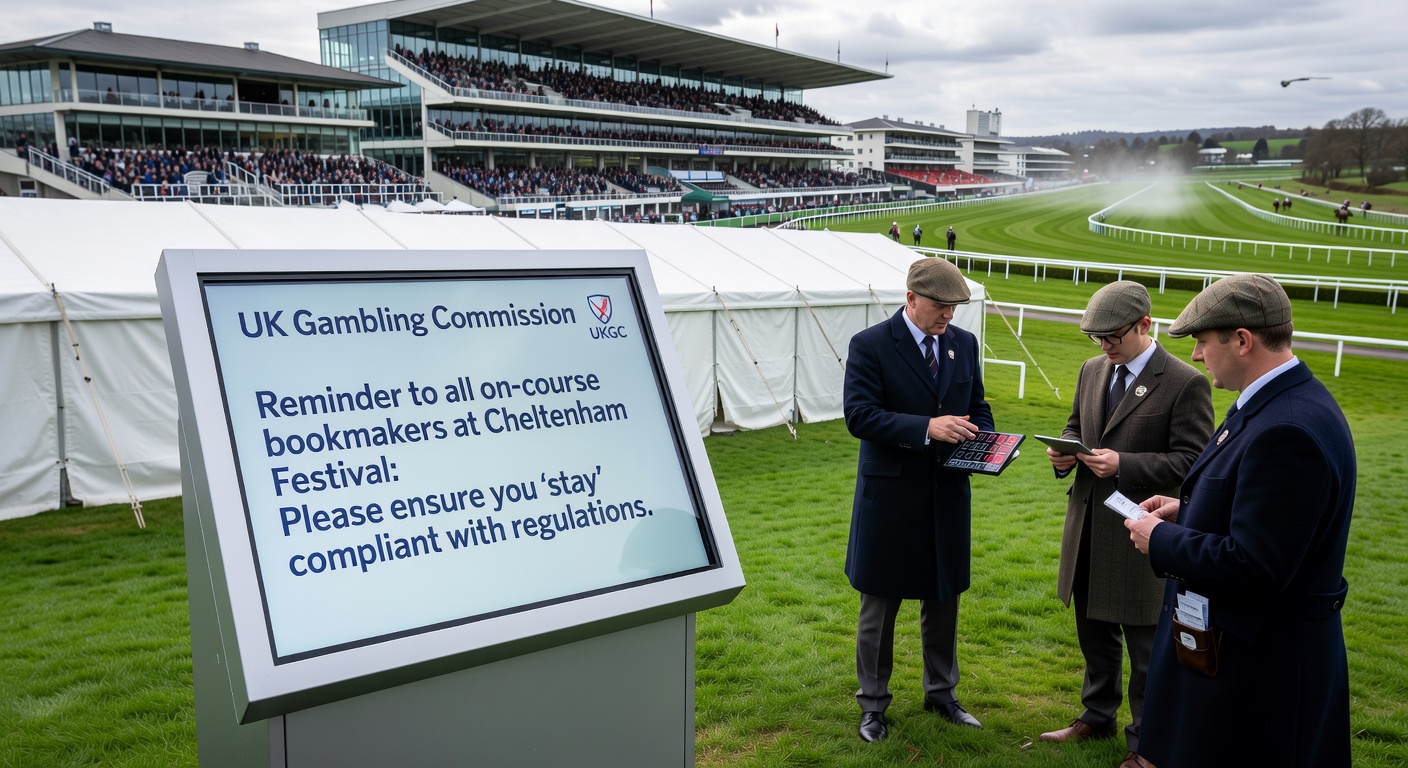
Now, as the Cheltenham Festival unfolds in March 2026, the UK Gambling Commission (UKGC) steps in with a timely reminder for on-course bookmakers, urging them to keep a sharp eye on suspicious activities like large cash volumes that could signal money laundering or terrorist financing; this alert lands right in the thick of one of the UK's biggest betting events, where high-stakes wagers flow freely and the atmosphere crackles with anticipation.
Bookmakers at Prestbury Park, the iconic venue for the four-day Cheltenham Festival, face this directive head-on, bound by Licence Conditions and Codes of Practice (LCCP), specifically those rules that demand vigilance against financial crimes; the UKGC's message underscores how, even amid the thrill of jumps racing and Gold Cup glory, operators must prioritize compliance, scanning for red flags in cash-heavy transactions that deviate from the norm.
Cheltenham Festival: A Betting Powerhouse in Full Swing
The Cheltenham Festival, held annually over four days in mid-March, draws massive crowds to Gloucestershire's rolling hills, where top National Hunt horses battle it out in races like the Champion Hurdle and the prestigious Cheltenham Gold Cup; this year in 2026, the event coincides with peak betting season, turning betting rings into hives of activity as punters place everything from modest flutters to substantial cash bets right there on course.
And while the festival captivates with its tradition-soaked spectacle—think emerald turf, thundering hooves, and roars from the stands—it's the financial side that grabs regulators' attention; on-course bookmakers, those traditional pitch operators under the rails, handle a significant slice of the action, often in physical cash that demands extra scrutiny because, unlike online platforms, it leaves a tangible trail ripe for exploitation if not monitored closely.
Turns out, this vigilance push isn't happening in a vacuum; data from UK racecourses paints a picture of booming activity, with total wagers at race meetings hitting £248 million between April 2024 and March 2025, a solid 9.5% jump from the previous year, according to recent industry figures; that surge highlights why the UKGC chooses now to reinforce the rules, as higher volumes naturally amplify risks for illicit flows.
People who've covered these events year after year note how Cheltenham stands out, not just for its prestige but for the sheer scale of on-site betting; one observer recalls past festivals where cash rings buzzed non-stop, processing thousands of transactions daily, which makes the commission's alert all the more pointed—stay sharp, or face the consequences.
Breaking Down the UKGC's Specific Alert
The UKGC's reminder zeroes in on on-course bookmakers at Cheltenham, calling out the need to flag large cash volumes and other suspicious patterns under LCCP mandates; operators must watch for bets that seem off—unusually high amounts in cash, rapid multiple transactions, or punters avoiding electronic methods—since these could link to money laundering schemes where dirty funds get cleaned through legitimate gambling channels.
But here's the thing: this isn't vague advice; the commission ties it directly to Licence Conditions and Codes of Practice (LCCP), particularly those sections on anti-money laundering and reporting duties, ensuring bookmakers know exactly where they stand; for instance, when a transaction raises eyebrows, staff train to intervene, verify identities if needed, and report up the chain without delay.
What's interesting is how the alert dovetails with the festival's timing in March 2026, catching bookmakers as they gear up for the influx; the UKGC emphasizes that compliance forms the backbone of a safe betting environment, protecting not just the industry but punters and the public from broader threats like terrorist financing, where cash-heavy ops provide a covert entry point.
Take one case from industry watchers: during high-profile meets, bookies have spotted patterns like structured deposits—just under reporting thresholds—to evade detection, prompting swift UKGC-guided responses; this reminder reinforces those lessons, reminding everyone that the festival's excitement doesn't pause the duty to safeguard.
Record Betting Figures Fuel the Regulatory Focus
Figures reveal the backdrop driving this UKGC push: UK race meetings raked in £248 million in wagers from April 2024 through March 2025, climbing 9.5% year-on-year, which signals robust growth in an industry that's adapted post-pandemic with bigger crowds and bolder bets; Cheltenham, as the crown jewel, contributes disproportionately, with on-course cash bets forming a key pillar amid digital shifts elsewhere.
Yet, that growth brings challenges; higher volumes mean more opportunities for bad actors, so the commission's note serves as a proactive nudge, aligning with trends where regulators worldwide tighten grips on cash-intensive gambling spots; experts who've tracked these stats observe how such upticks—fueled by economic recovery and event hype—necessitate stronger internal controls at venues like Prestbury Park.
And while online betting dominates headlines, on-course action holds its own, especially at festivals where the tactile thrill of handing over notes for a winner adds to the allure; this £248 million haul underscores why vigilance matters now more than ever, as unchecked cash could undermine the sector's integrity.
Diving into LCCP: teh Rules Bookmakers Live By
Licence Conditions and Codes of Practice (LCCP) set the gold standard for UK gambling operators, with Condition 12.1.1 mandating robust anti-money laundering measures like customer due diligence, transaction monitoring, and staff training; bookmakers at Cheltenham must apply these on the fly, assessing risks in real-time amid the festival frenzy.
Conditions 15.1.2 and 15.2.1 ramp it up further, requiring reports of suspected offences to authorities without tipping off the punter, ensuring a seamless handoff to bodies like the National Crime Agency; so, when a bookmaker spots a large cash pile destined for a string of bets, they document, assess, and escalate if patterns scream foul play.
It's noteworthy that these aren't optional; non-compliance risks fines, licence revocation, or worse, as the UKGC wields enforcement powers honed over years of oversight; those who've studied LCCP implementations point out how training programs—often scenario-based with Cheltenham examples—equip staff to spot the subtle cues, from nervous behavior to mismatched stories.
Now, in the context of March 2026's festival, this framework shines; bookmakers, already stretched by volume, lean on these codes to maintain order, proving that regulation and racing can coexist when handled right.
What This Means for On-Course Operations and Beyond
For the bookmakers pitching tents at Cheltenham, the UKGC alert translates to heightened protocols: enhanced cash logs, ID checks on big bets, and immediate huddles with compliance teams; crowds might swell to over 200,000 across the four days, but each transaction gets the once-over, balancing speed with security in a high-pressure ring.
Observers note how past festivals tested these systems, with occasional busts making headlines and reinforcing the rules; this reminder builds on that, fostering a culture where vigilance becomes second nature, even as wagers hit record highs.
Broader ripples touch the entire UK racing ecosystem; with £248 million wagered yearly at meetings, sustained growth depends on trust, and clean operations at flagships like Cheltenham set the tone; punters keep coming back knowing safeguards are in place, while operators avoid pitfalls that could sour the sport's reputation.
So, as the 2026 festival progresses, bookmakers embody this dual role—facilitators of fun, guardians against graft—ensuring the legacy endures.
Conclusion
The UKGC's reminder to Cheltenham bookmakers cuts through the festival's roar, spotlighting LCCP duties amid a 9.5% betting surge to £248 million; by flagging cash risks tied to laundering or terror financing, regulators safeguard an industry on the rise, where compliance fuels confidence.
In March 2026, this alert proves timely, blending tradition with modern oversight; bookmakers rise to it, upholding standards that keep the rings